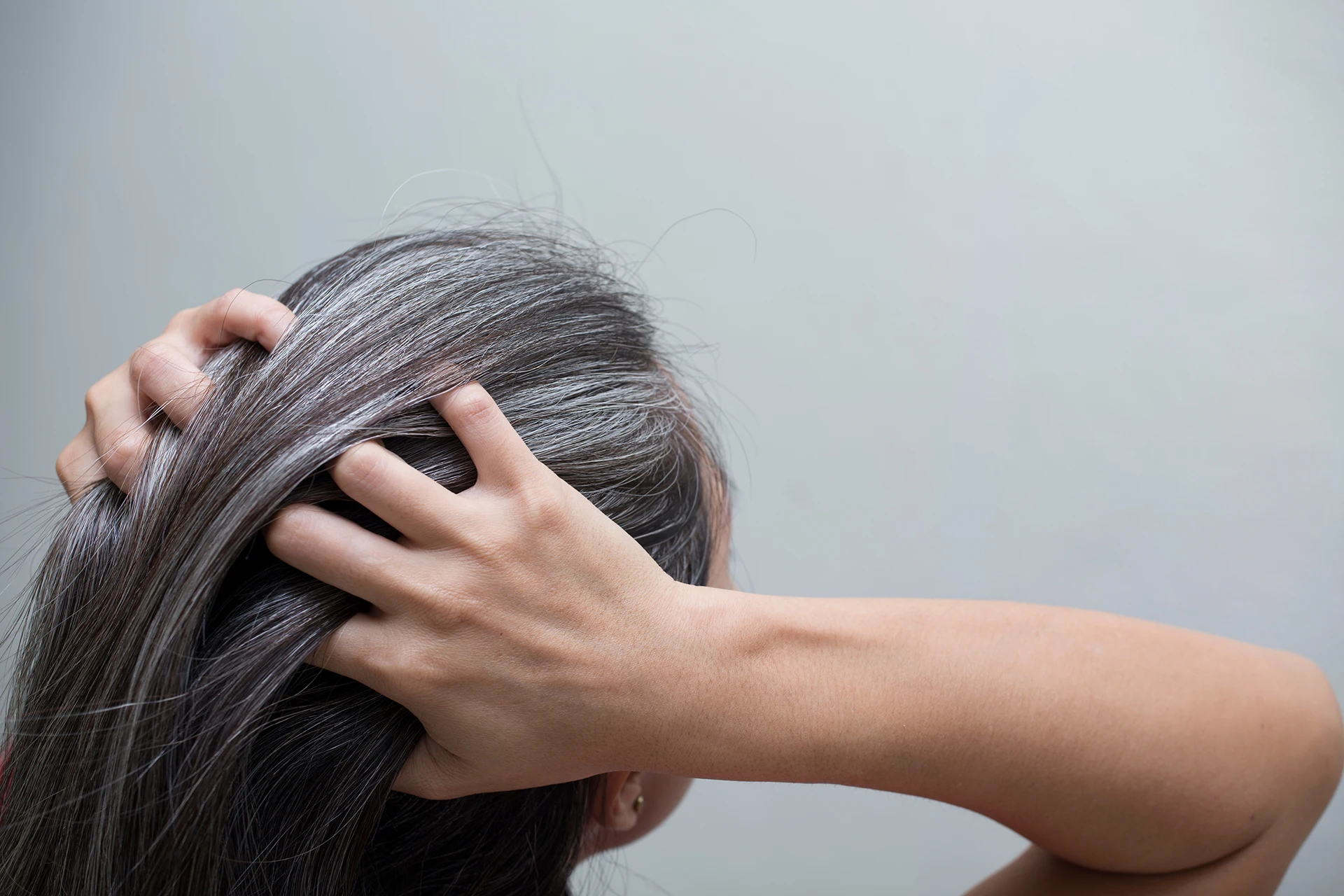
Unlock your best hair using the power of your body’s natural response and self-healing! At The Center for Aesthetics and Plastic Surgery in Neenah, Plover, and the entire Fox Valley, we offer an innovative solution: PRP hair restoration treatment. This transformative cutting-edge therapy utilizes your own blood platelets to stimulate hair growth, helping individuals with thinning hair achieve a fuller and healthier head of hair safely and naturally.
PRP Hair Restoration
What is a PRP Hair Restoration Treatment?
PRP treatments supply natural proteins, cytokines, stem cells, and other bioactive growth factors to the treated areas. These growth factors, found in platelet-rich plasma, have the potential to reverse hair loss and stimulate new hair growth.
Book Appointment
How Does PRP Hair Restoration Work?
PRP therapy involves drawing a small amount of blood, like that needed for a basic lab test. The blood is then placed in a sterile tube and spun in a centrifuge to separate its components. The red and white blood cells are divided from a high concentration of platelets and the clear plasma fluid. The PRP, containing platelets, is injected into the patient’s scalp to reach the subdermal space where the hair follicle bulb resides. The platelets in PRP can potentially stimulate the growth of hair follicles by activating stem cells and other cells in the hair follicle’s microenvironment. The plasma with high concentrations of platelets aids in promoting hair growth by prolonging the hair cycle’s growth phase and increasing hair thickness. This stimulation of the hair follicle assists in cell and wound healing, collagen production, and hair regrowth while inhibiting further shedding. The primary goal of using PRP in hair restoration is to prompt inactive hair follicles to enter an active growth phase.
Benefits of PRP Hair Restoration
PRP hair restoration is a popular choice due to its simplicity and numerous benefits. It contains essential proteins that stimulate natural hair growth and slow down hair loss. PRP is non-surgical, minimally invasive, with little to no risk of reaction. It effectively stimulates hair follicle growth, reduces miniaturization, and works for both men and women. The results are subtle and natural.
Before During and After
What to Expect Before a PRP Hair Restoration Treatment
Before treatment, our team of experienced practitioners will provide you with a personalized skin care regimen designed to enhance your overall results. Our skilled and dedicated practitioners in Neenah and Plover will work closely with you to create a tailored plan that perfectly aligns with your unique needs and helps you achieve your desired aesthetic goals.
What to Expect During a PRP Hair Restoration Treatment
PRP treatment begins with the application of a local anesthetic to ensure comfort and numb the treatment area. While waiting for it to take effect, a blood sample is collected and placed in a centrifuge to isolate and activate the PRP and necessary growth factors. Once separated, the platelet-rich plasma is carefully injected just below the scalp’s surface using a fine-gauge needle. The injections follow a precise pattern, focusing on the areas of severe hair loss. A typical procedure usually takes between 60 and 90 minutes.
What to Expect After a PRP Hair Restoration Treatment
After a treatment, it is normal for your scalp to feel slightly numb. However, this sensation should subside on its own within a few hours, allowing you to freely resume your normal activities.
Frequently Asked Questions
Is PRP hair restoration an effective treatment for hair loss?
PRP hair restoration typically involves an initial round of four to six treatments. To maintain results, at least one touch-up treatment per year is recommended. While the success rate of PRP injections for hair restoration varies, it generally ranges from 70% to 90% for the average patient.
Who is a suitable candidate for PRP hair restoration?
If you have thinning hair, you may be an ideal candidate for hair restoration using PRP. However, PRP cannot fill in bald spots or be used on the scalp with open sores or lesions. Schedule a complimentary consultation to see if PRP for Hair Restoration is right for you.
Are there any side effects associated with PRP hair restoration?
Platelet-rich plasma eliminates the chance of allergies or immune reactions since the plasma is derived from your own blood. Side effects and complications are exceedingly rare; minor discomfort at the injection site and minimal risk of infection may occur.
How many sessions of PRP hair restoration are typically required?
PRP injections are usually performed monthly for three months, with additional treatments as needed to maintain results.
What can I expect during a PRP hair restoration procedure?
During the treatment, a small amount of the patient’s blood is drawn and placed in a centrifuge, which separates the platelets containing growth factors from the rest of the blood components. The resulting PRP solution is then injected into the scalp, stimulating hair follicles to grow stronger, healthier, and thicker. The procedure is minimally invasive and typically takes less than an hour.
Is the PRP hair restoration procedure painful? Is PRP hair restoration safe?
Extensive research has shown that this non-surgical procedure, which utilizes the patient’s own blood cells to stimulate hair regrowth, carries minimal risks. While minor redness, swelling, and a slight pinch during the injection may occur, serious complications are extremely rare. In summary, PRP hair restoration offers a promising, safe, and non-invasive option for those seeking hair restoration.
How soon can I expect to see results after PRP hair restoration?
Although you will begin to see enhancements in hair texture within two weeks, including increased thickness of the hair shaft and growth of new hairs in the treated area, it typically takes three to six months to see measurable results.
Are the results of PRP hair restoration permanent?
The results of PRP hair restoration are not permanent, but they are long-lasting, typically lasting from one to two years or more.
Can PRP hair restoration be combined with other hair loss treatments?
PRP hair restoration can be combined with other treatments to enhance the results and provide a comprehensive approach to hair loss. These treatments may include preventative hair loss drugs and/or state-of-the-art procedures like Neograft for hair transplantation. By combining these treatments, patients can increase their chances of achieving their desired outcomes and enjoying a full, healthy head of hair.
How do I prepare for a PRP hair restoration session?
To prepare for a PRP hair restoration session:
- Avoid taking any blood-thinning medications, supplements, or herbs for at least a week before your procedure.
- Refrain from using hair dyes or styling products on the day of your session.
- Wash your hair the night before.
Is there any downtime after a PRP hair restoration procedure?
While there may be some initial redness and swelling at the injection site, downtime after a PRP hair restoration procedure is minimal. Patients can typically return to their regular activities immediately after the procedure. However, it is advised to avoid any strenuous activities or excessive sweating for at least 48 hours following the treatment. This is to ensure that the scalp has time to heal and that the platelet-rich plasma is able to properly stimulate hair growth.
Are there any restrictions or post-procedure care guidelines I should follow?
After undergoing PRP hair restoration treatment, it is recommended to refrain from using any hair products for at least six hours. Additionally, avoid saunas, steam rooms, vigorous exercise, direct exposure to sun and heat, as well as swimming for a minimum of two days post-treatment. Furthermore, it is recommended to abstain from alcohol, caffeine, and cigarettes for three days following the treatment.
What are the benefits of PRP hair restoration compared to other hair loss treatments?
One of the major benefits of PRP hair restoration is that it doesn’t involve any harsh chemicals or medications that could cause unwanted side effects that other hair loss treatments do. As more and more people are turning to natural and holistic approaches to maintain their health and well-being, PRP treatment stands out as a hair restoration option that focuses on harnessing the body’s innate ability to heal itself.
How soon can I wash my hair after undergoing PRP hair restoration?
It is generally advised to refrain from washing your hair for 24 hours after treatment. Afterward, use a pH-balanced shampoo.
Can PRP hair restoration improve hair density in addition to hair regrowth?
PRP, containing growth factors has been proven to enhance hair growth, resulting in thicker, fuller hair with increased density.
How is PRP for Hair Restoration Performed?
PRP is a simple procedure that begins by gently numbing the area to be treated with a local anesthetic. While waiting for it to take effect, a blood sample is collected to be separated in a centrifuge. Once separated the platelet rich plasma is placed in a syringe so it can be injected just below the scalp’s surface. A single procedure typically takes between 60 and 90 minutes.
Benefits of PRP for Hair Restoration
People regularly choose PRP for hair restoration because it is such a simple procedure. It can also provide some tremendous benefits, a few of which include:
- Little to no risk of reaction
- Stimulates hair follicle growth
- Can reduce miniaturization (shrinking of hair follicles)
- Works for both men and women
- Benefits are seen gradually over time, making it less noticeable you’ve undergone a procedure
Recovery from PRP for Hair Restoration
Your scalp may feel slightly numb just after a treatment, but this feeling should go away on its own within a couple of hours. In the meantime, you are free to resume normal activities.
Is PRP for Hair Restoration Right for Me?
PRP can be an effective method to help If you have thinning hair. It cannot be used to fill in bald spots. Your scalp should be in good condition with no open sores or lesions. The best way to know if this procedure is a good fit for you is to schedule a consultation.
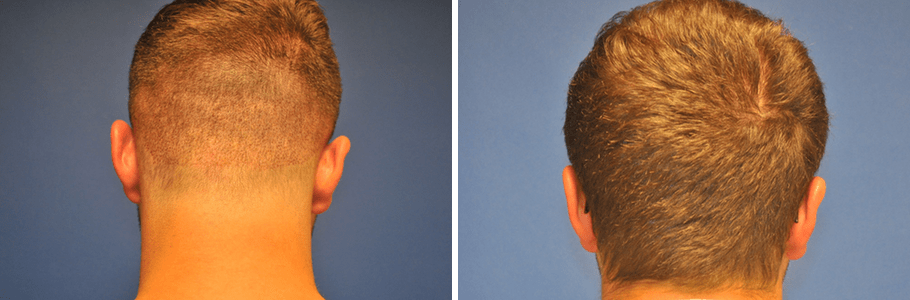
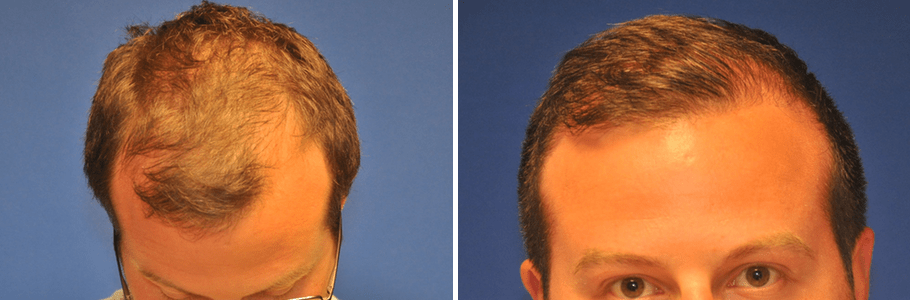
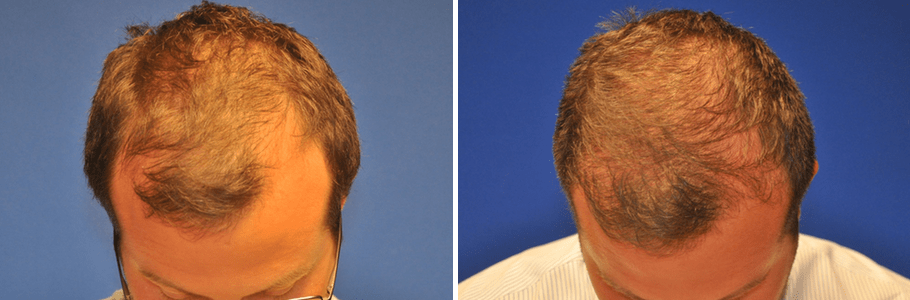
See Real Results From Real Patients
At The Center for Aesthetics & Plastic Surgery, we believe in the power of transformation. Our commitment to enhancing natural beauty and confidence is exemplified through the remarkable before and after results achieved by our clients.
View Before / After GalleryPRP Hair Restoration
Patient Voices: The True Measure of Our Care